

Sustainable optical materials grown from a sponge
Researchers have demonstrated the potential of optical fibers naturally grown from a marine sponge. This presents a sustainable alternative to conventional man-made optical fibers, which are used in a broad array of applications. Published in the journal ACS Applied Optical Materials, the findings show impressive optical properties in biological fibers, opening the door to further developments in sustainable optical materials.
Nature’s design
Fiber optics are used in many applications, for example high-speed internet. The cables that guide light signals are typically made of ultra-pure silica glass, which requires manufacturing processes involving high temperatures, toxic chemicals and significant energy input.
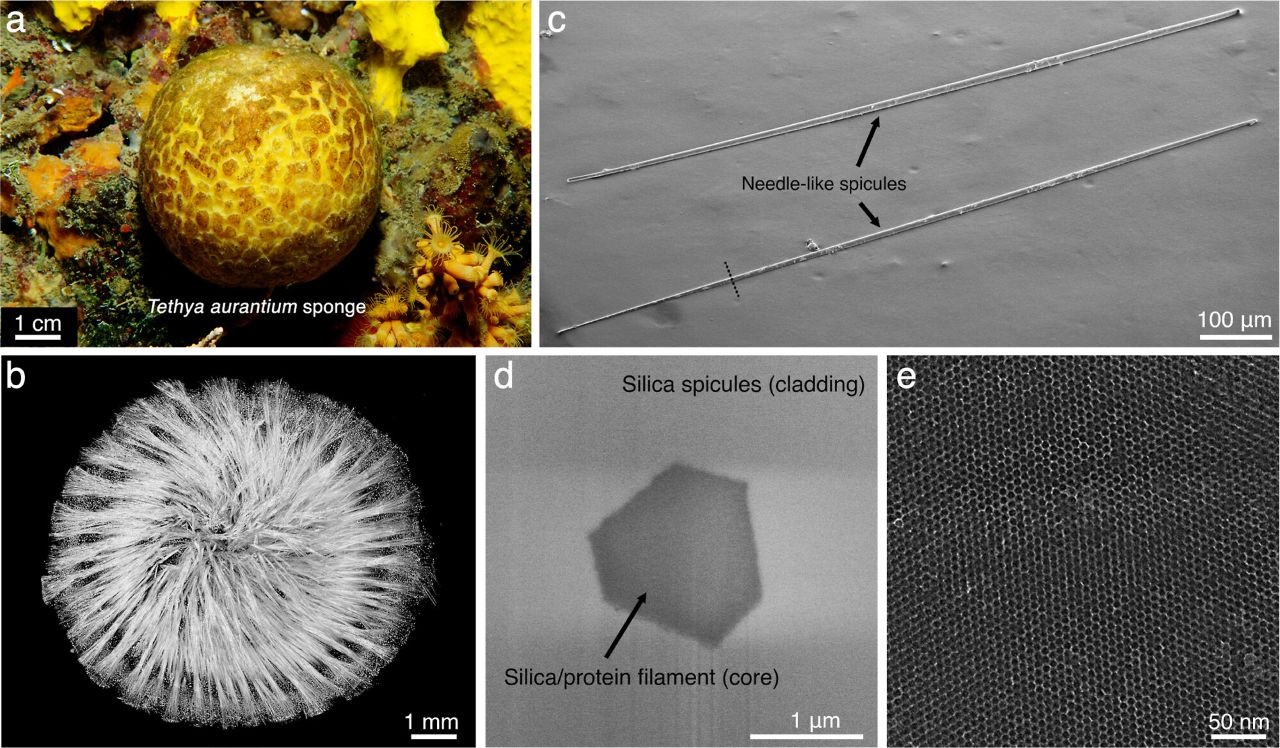
However, similar glass fibers are also found naturally occurring in sponges – specifically, in their spicules, which are the microscopic structural frames that invertebrate species have instead of skeletons. Kian Goeloe, PhD candidate at ARCNL, was curious as to whether these sponge-based fibers could be used for fiber optics. “Solutions are often found in an industrial way, so it can be easy to forget that nature is already creating its own designs. These may have similar properties, but with a significantly lower carbon footprint,” says Kian.
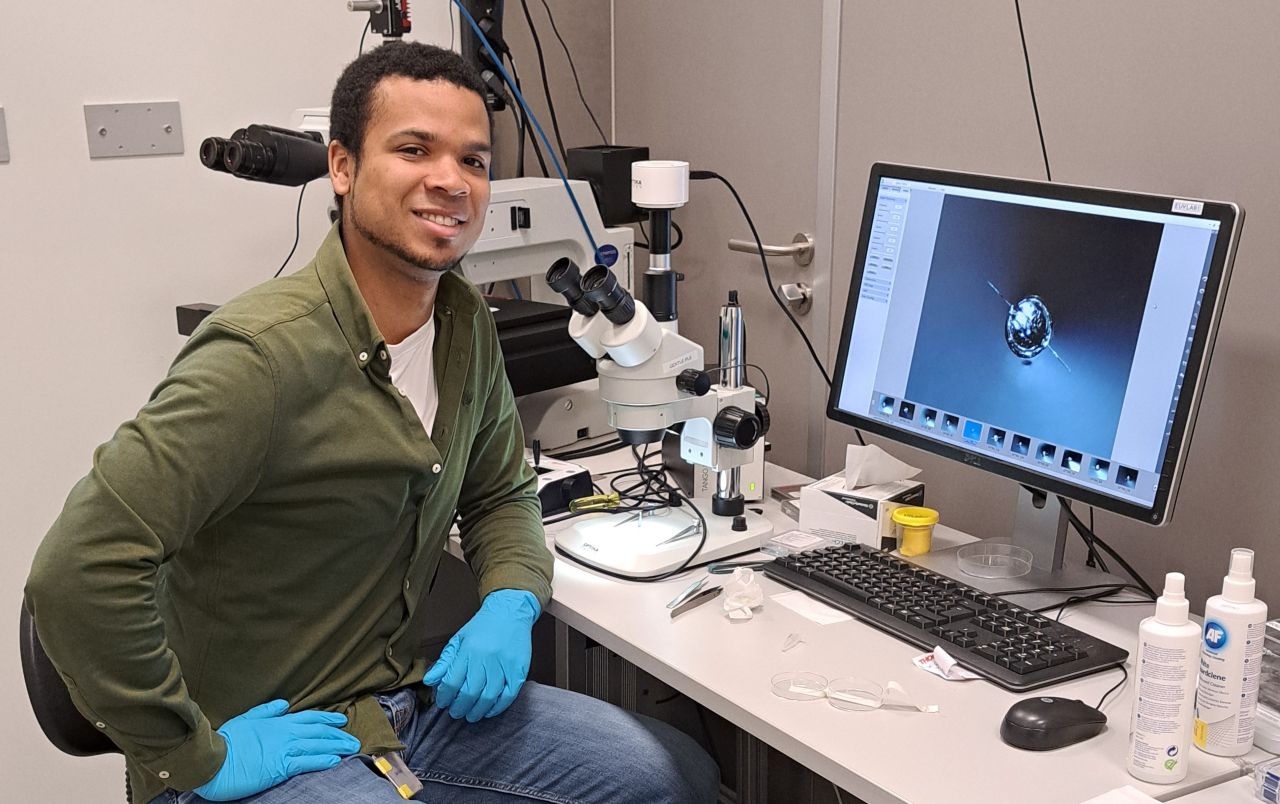
Together with co-author Igor Zlotnikov from the Dresden University of Technology and principal investigator Lyuba Amitonova at ARCNL, Kian experimented with biological glass fibers made of the spicules of the marine sponge Tethya aurantium, commonly known as the orange puffball sponge or golf ball sponge. Specifically, he measured how the fibers affect the polarization and phase of light waves. Due to the difficulty of extracting extremely small fibers from the samples, conducting such experiments requires patience and persistence – preparing a single sample for optical measurements can take over half a day. Moreover, not every sample you prepare is guaranteed to be suitable for proper measurements. However, in the end, all the time in the lab proved to be worth it.
On par with man-made fibers
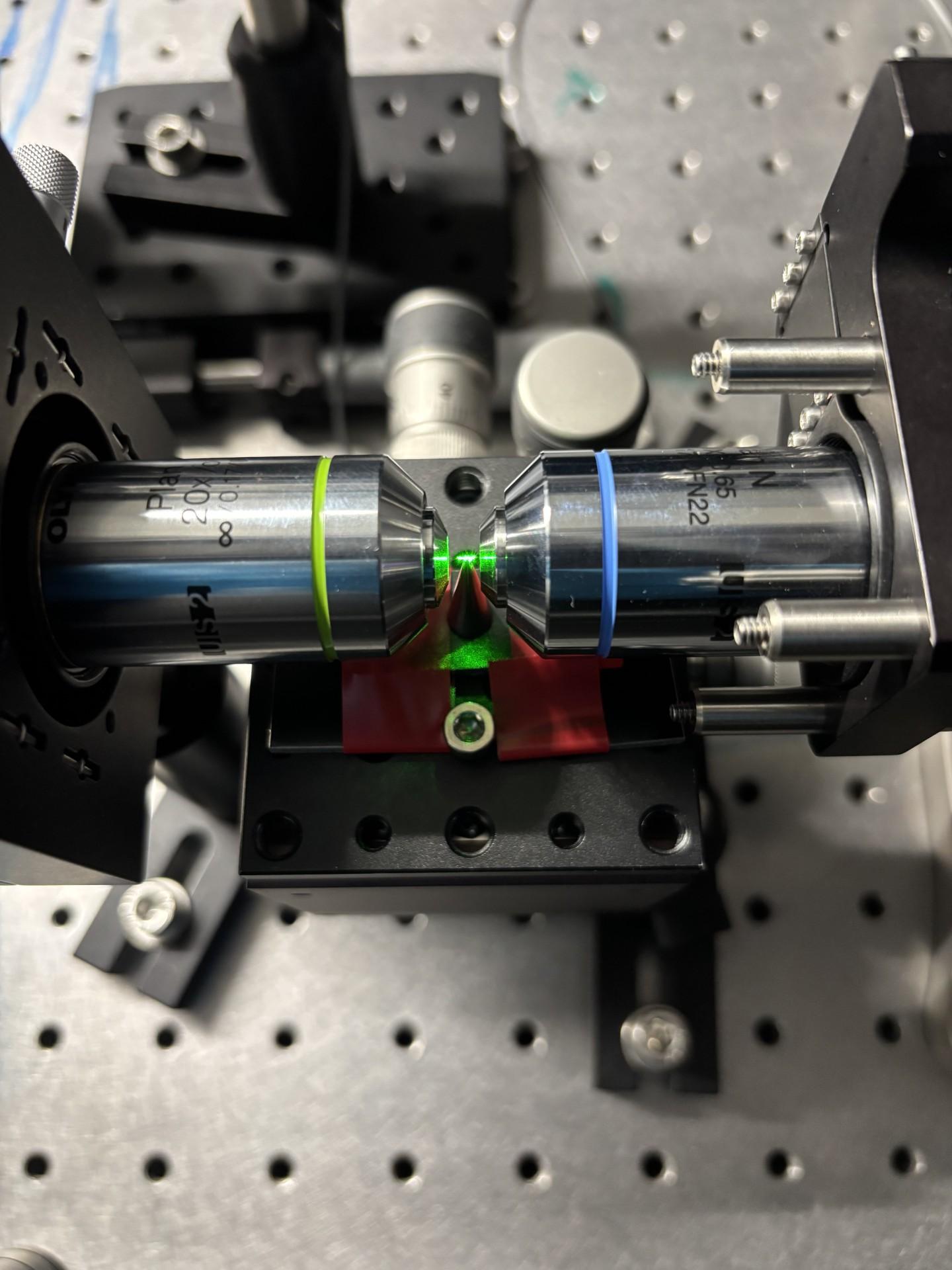
Kian’s experiments showed that the orange puffball sponge spicule has remarkably strong optical properties. He and the team found that the spicule fibers were able to guide light without unwittingly changing its properties, due to a high numerical aperture (how much light can be focused) and low intrinsic birefringence (how much the material affects the phase of the light wave).
The performance of the sponge-based optical fibers was comparable to what can be expected of man-made fibers, making these results promising for the future of sustainable optical materials. “With further research to better understand sponge-based fibers, high-quality optical fibers may someday be ‘grown’ with low energy costs and low carbon footprint,” says Kian.
With uses in data transmission, metrology in semiconductor manufacturing and deep-tissue imaging, fiber optics have a role in a broad array of real-world applications. This study of sponge-based optical fibers, published in the journal ACS Applied Optical Materials, may be an exciting step toward making these industries more ecologically sustainable.
Contact
For more information about this research, contact Kian Goeloe: K.Goeloe@arcnl.nl.
Publication
Kian M. M. Goeloe, Igor Zlotnikov, and Lyubov V. Amitonova, Wavefront Engineering and Polarization Dynamics in Biological Glass Fibers, ACS Applied Optical Materials 4 (2), 421-428 (2026). DOI: 10.1021/acsaom.5c00572


