
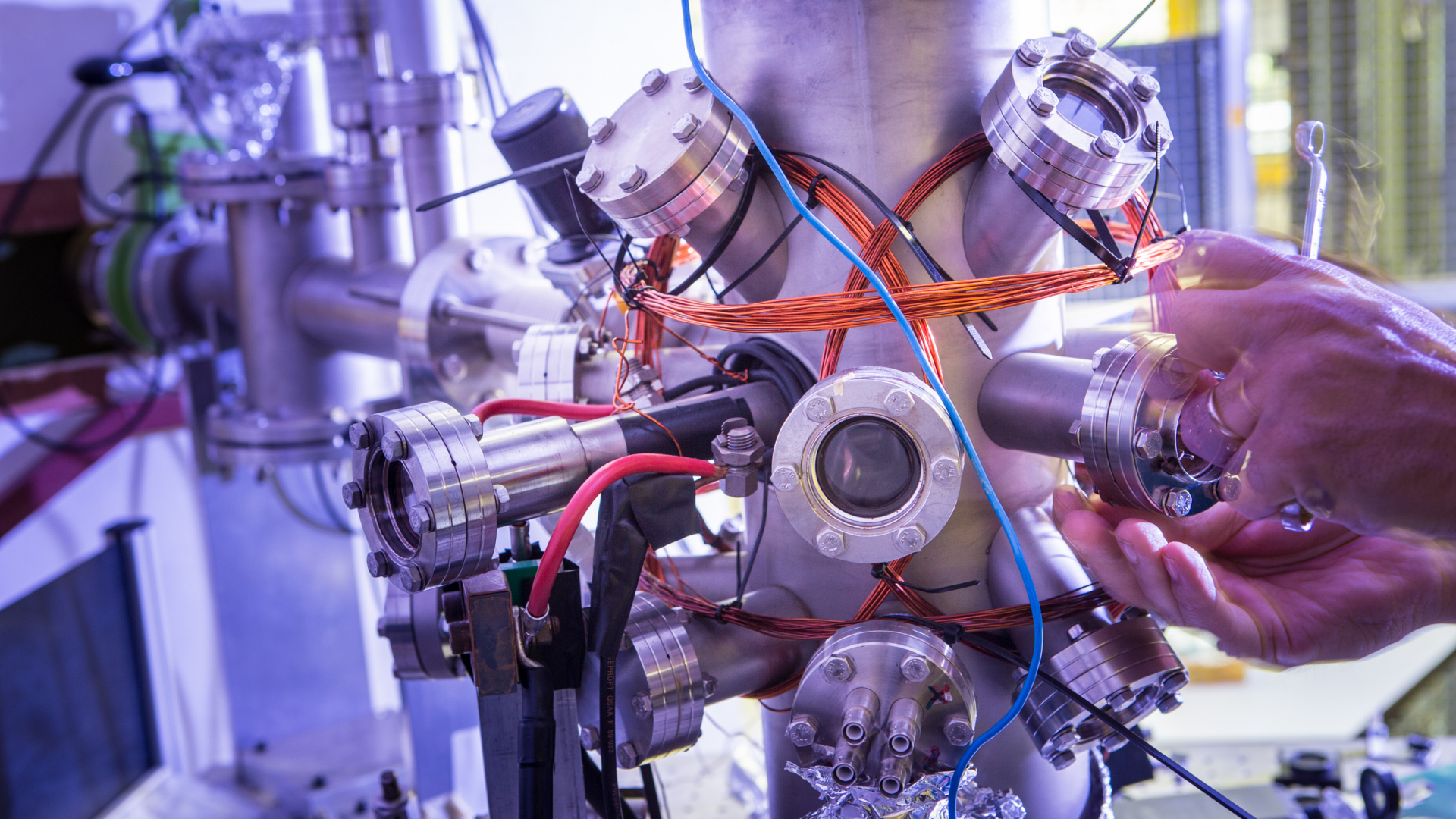
Visitors from local schools enjoy a day of physics at Viva Fysica
On January 30, the University of Amsterdam Institute of Physics (UvA-IoP) hosted Viva Fysica 2026. The event showcases physics and astronomy research at Amsterdam Science Park for interested high school students and their teachers. ARCNL group leader Oscar Versolato gave a lecture about tin plasma and nanolithography, and ARCNL researchers hosted an afternoon program of lab tours and demonstrations.
Viva Fysica welcomed 140 high school students (5/6 VWO) and teachers to Amsterdam Science Park for a day full of physics. The event is organized as a way to inform teachers about current developments and to encourage students nearing the end of their high school years to study physics. In collaboration with Bètapartners, the University of Amsterdam Institute of Physics planned a program of lectures about research at Amsterdam Science Park in the morning, followed by an afternoon of institute visits and workshops.
ARCNL group leader Oscar Versolato was one of the lecturers in the morning program, giving an engaging talk about “the miraculous physics of nanolithography.” He shared his own group’s research on tin plasma and how it generates extreme ultraviolet light, which is used in nanolithography machines to print patterns on computer chips. Oscar also gave participants a preview of the afternoon program at ARCNL.
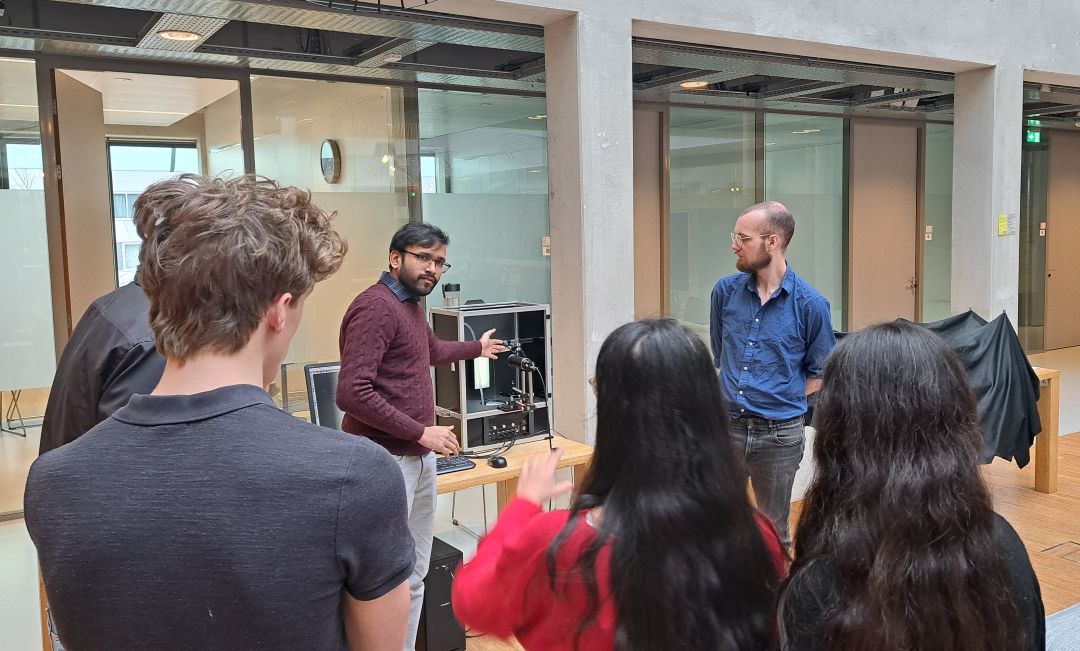
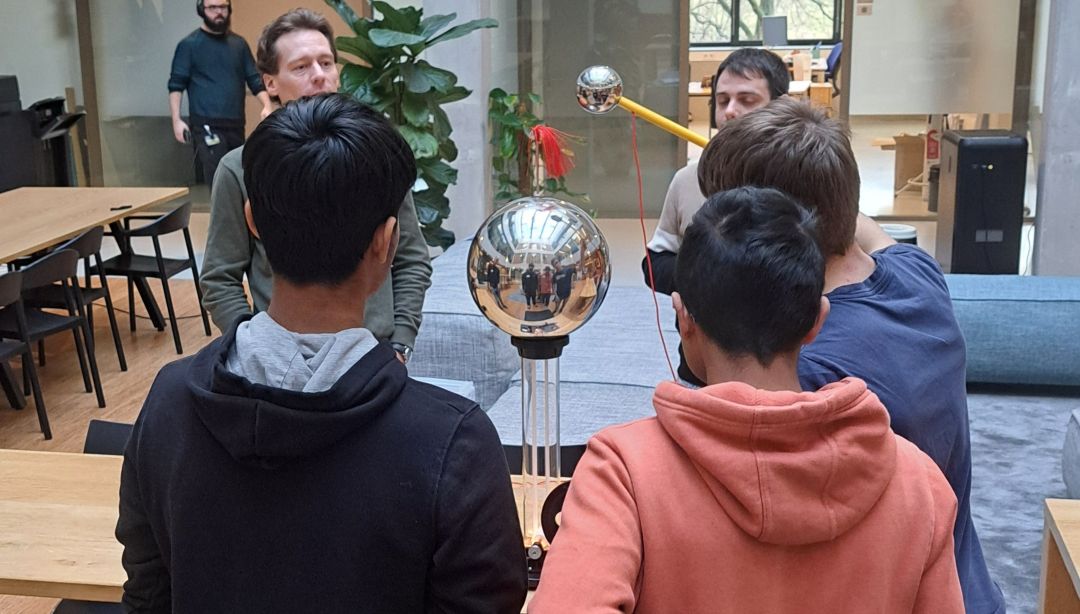
In the afternoon, a group of about 20 students and teachers arrived at ARCNL, where they saw an introductory talk by our institute manager Marjan Fretz. Then, the group visited lab tours and demonstrations hosted by ARCNL researchers. Four labs hosted tours, including Oscar’s own lab. The visitors enjoyed seeing where real research happens, as well as being able to choose between labs to visit. At the same time, on the demonstration floor, students experienced static electricity with a Van de Graaff generator, measured the friction in their shoes, saw how light waves rotate, and learned how liquid droplets can be controlled.
For more information about the Viva Fysica program, visit the Bètapartners website.


